Heat stress
Topics
3 min read

Heat stress can affect cow wellbeing, milk production, health and reproduction. Unlike people, cows can start experiencing heat stress at temperatures above 20°C. Signs include faster breathing, reduced grazing, increased drinking and slower movement. Providing shade, clean drinking water and cooling can help keep cows comfortable during hot weather.
Cows can experience heat stress from around 20°C, and every region of New Zealand experiences conditions that can put cows at risk.

Look for fast breathing, drooling, reduced grazing, increased standing, and cows seeking shade.

An increased breathing rate is often the earliest sign of heat stress. If a cow takes more than 10 breaths in 10 seconds, it may indicate the herd needs cooling.

Provide shade, plenty of clean drinking water and cooling options before cows become heat stressed.
Cows generate a lot of heat when they digest feed and produce milk. While this helps keep them warm in winter, it can be a challenge during summer. Their comfort zone is between 4°C and 20°C. Within this range, cows can maintain their body temperature without using extra energy to keep cool or stay warm. This is much cooler than the temperatures many people find comfortable.
Heat stress occurs when cows generate or absorb more heat than they can get rid of. One of the main ways cows cool themselves is through evaporation. To increase evaporation, they breathe faster and sweat more, although their ability to sweat is limited.
Conditions such as high humidity, strong sunshine and low wind speeds can increase the risk of heat stress because evaporation becomes less effective.

Watch for these seven signs:
Not sure if your cows are heat stressed? Check their breathing rate. An increased breathing rate is often the earliest sign of heat stress.
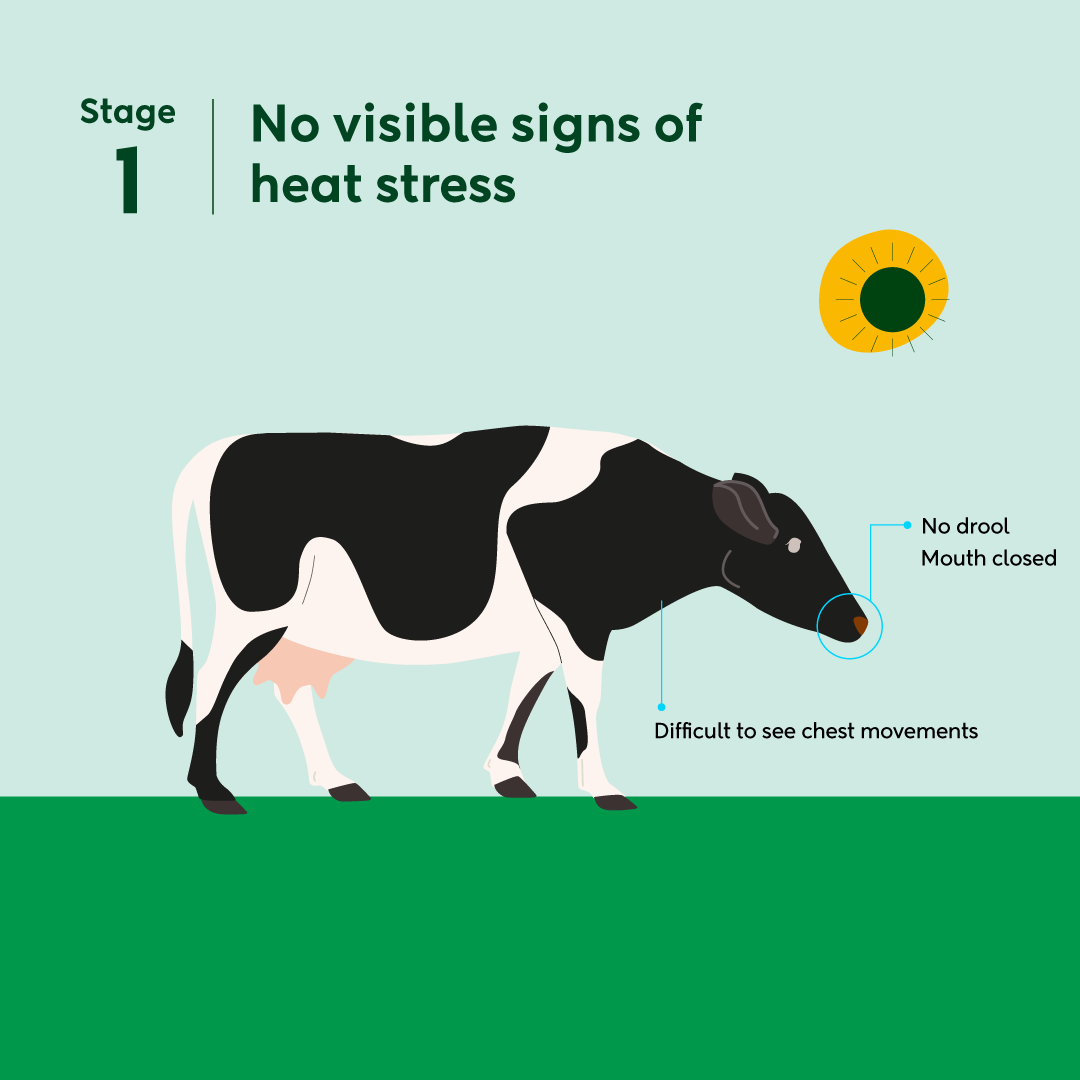
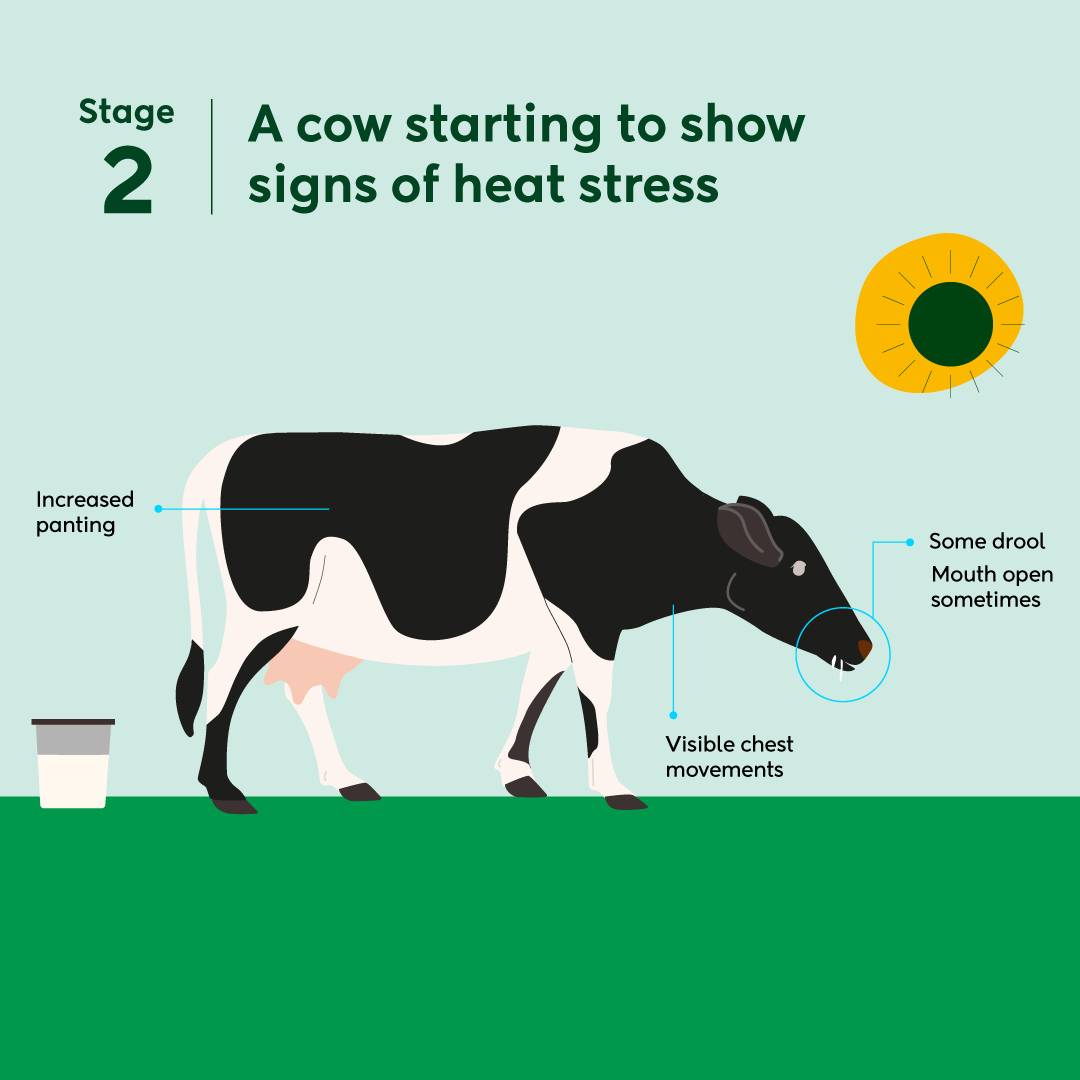
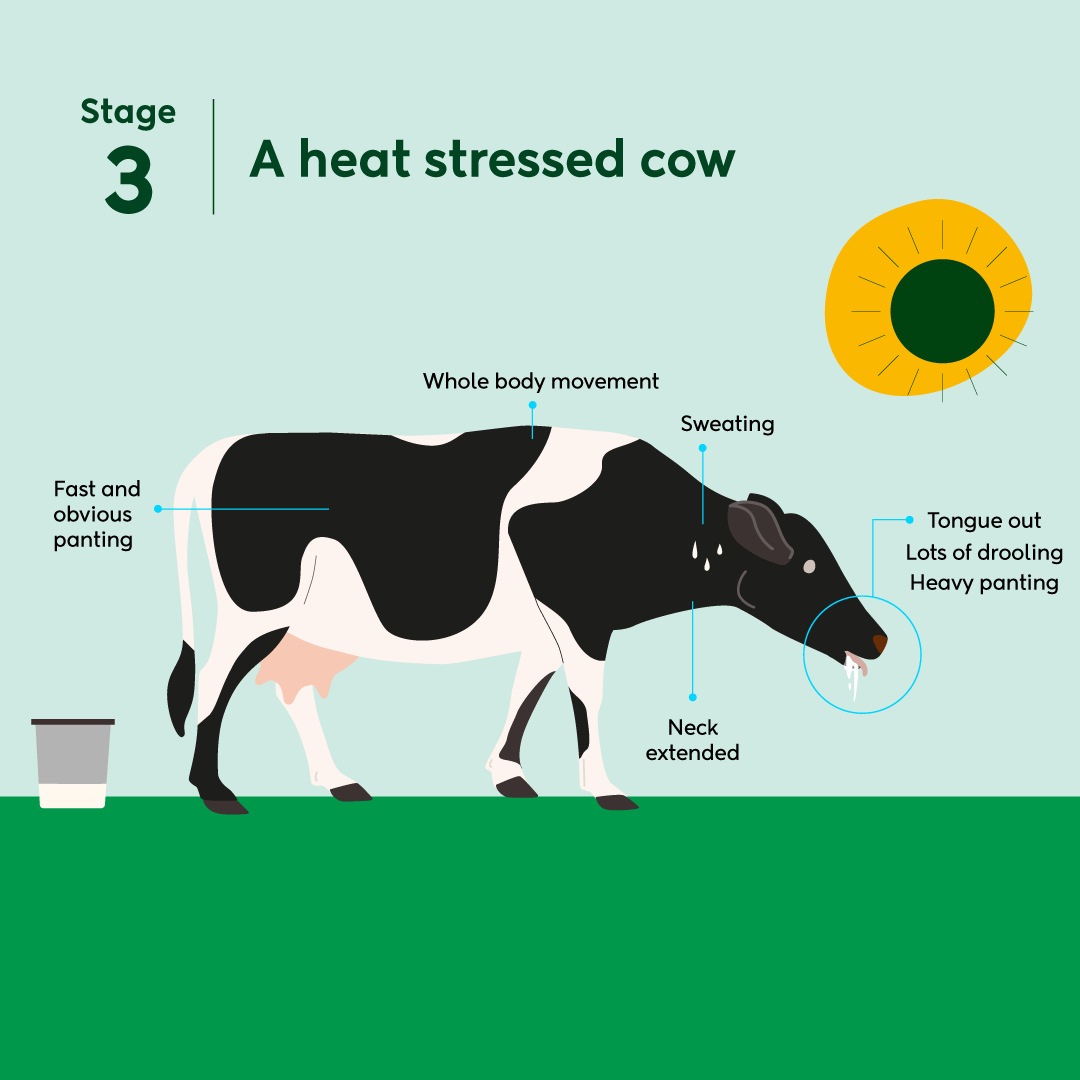
An increased breathing rate is often the earliest sign of heat stress. On a warm summer afternoon, observe the breathing rate of several cows in the herd. If a cow takes more than 10 breaths in 10 seconds, it may indicate heat stress and that the herd would benefit from cooling measures.

| Stage 1 - no visible signs | Stage 2 - early signs of heat stress | Stage 3 - heat stressed |
| No drooling, mouth closed. | Increased panting. | Fast, obvious panting. |
| Difficult to see chest movements. | Some drooling, mouth occassionally open. | Tongue out, lots of drooling. |
| Visible chest movements. | Neck extended. | |
| Whole body movement when moving. |


All dairying regions in New Zealand experience days when conditions exceed a cow's optimal range for comfort and production. Solar radiation, wind speed and temperature can all influence a cow's heat load. By 2050, the number of days with a heat stress risk is predicted to increase, including in regions that have traditionally been less affected.
Modelling indicates that cows are currently at risk of heat stress for between 37 and 80 days each year, depending on the region.
| Region | Days at risk |
| Waikato | 69 days |
| Bay of Plenty | 69 days |
| Canterbury | 80 days |
| Taranaki | 38 days |
| Manawatu | 47 days |
| Otago-Southland | 37 days |
The modelling shows potential risk without mitigation. Many farms already use shade, cooling and other management practices that help reduce heat stress, so the actual number of risk days may be lower.
To help identify conditions that may put cows at risk, New Zealand scientists developed the Grazing Heat Load Index (GHLI). The GHLI combines temperature, solar radiation and wind speed to estimate the heat load experienced by grazing cows.
When the GHLI exceeds 55-60, cows are at risk of heat stress unless they have access to shade or cooling. On a sunny day with little wind, the GHLI can reach 55 at temperatures as low as 18°C. On an overcast day or when there is a moderate breeze, temperatures may reach 24°C before the GHLI exceeds 55.
Average number of days a year that dairy cows are at risk of heat stress across New Zealand.


Data presented is based on the temperature, solar radiation and wind speed captured in the Grazing Heat Load Index (GHLI). This index records heat stress above GHLI value of 55. The information was collected during 2006 to 2024 (Woodward, et al., 2024). Colour scale represents the numbers of days that cows are at risk of heat stress. Purple lines depict local regional councils.
Providing shade, cooling and plenty of clean drinking water can help maintain cow comfort and reduce the impact of heat stress on production. Cows are highly motivated to seek shade on hot, sunny days, and well-designed shaded areas can help reduce competition within the herd. Sprinklers can also be an effective cooling option when they thoroughly wet the cow's coat. A reliable supply of clean water is essential, as cows' water requirements increase significantly during summer.
Good management practices can also help cows cope with hot conditions. Reducing walking distances, avoiding time on unshaded yards during the hottest parts of the day and adjusting milking times can help keep cows cooler. While dietary changes generally have less impact than shade and cooling, offering more feed during cooler parts of the day can support cows through periods of heat.
Heat stress is becoming a bigger challenge for many dairy farms and can affect both cow comfort and production. In this episode, you'll hear how DairyNZ's summer trial at Scott Farm is evaluating common heat stress mitigation tools and their return on investment, helping identify practical options for farmers.
Now’s the perfect time to check in, plan, and set up for a strong season. We’ve pulled together smart tips and tools to help you stay ahead all winter long.
Whether you prefer to read, listen, or download handy guides, we’ve got you covered with trusted tools to support your journey every step of the way.
Put our proven strategies and seasonal tools to work. Boost production, support animal health and watch your profits hum.
Tools that are backed by science, shaped by farmers and made for this season.
That’s Summer Smarts.
Autumn Smarts brings together the research-backed tools that build resilience and boost performance.
The tools and insights you need to navigate the season with confidence. Backed by research and built for results – that’s Winter Smarts.