Preventing lameness
Topics
2 min read

Lameness on dairy farms results from a combination of cow, environmental, and management factors, and it carries significant costs through reduced fertility, lost production and treatment. This page covers the cost of lameness, keeping accurate records, developing a farm-specific prevention plan and the different risk factors. Early identification and effective treatment, combined with ongoing monitoring and prevention ensure cows stay healthy, productive, and comfortable.
The key to preventing lameness on farm is identifying risk factors and developing a lameness prevention plan that is monitored and reviewed.
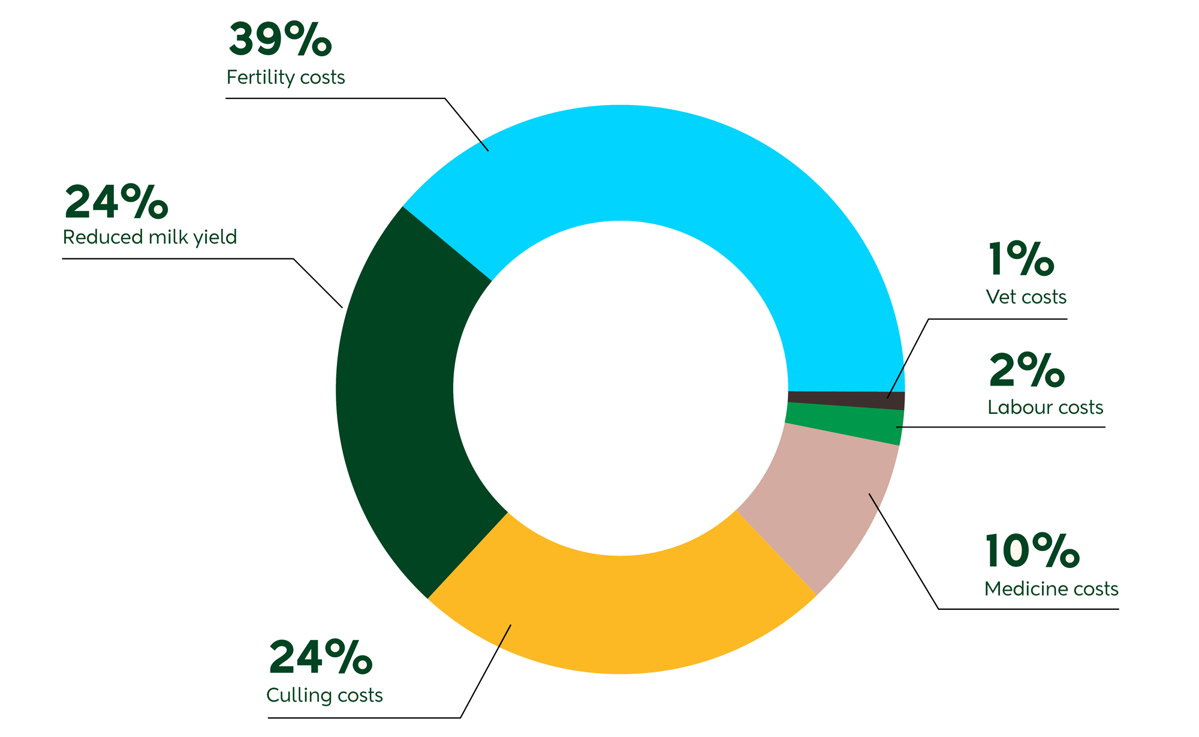
The average cost of a case of lameness on your farm is estimated to be $300–$800. The actual cost will vary depending on factors such as lesion type and severity, time of season, and the cow’s lameness history. This range is based on a combination of overseas data and New Zealand expert consensus. The biggest impact is on reproductive performance for cows that become lame soon after calving and are less likely to get in-calf. The inclusion of pain relief in your treatment plan can help to reduce this loss.
Cost breakdown of lameness
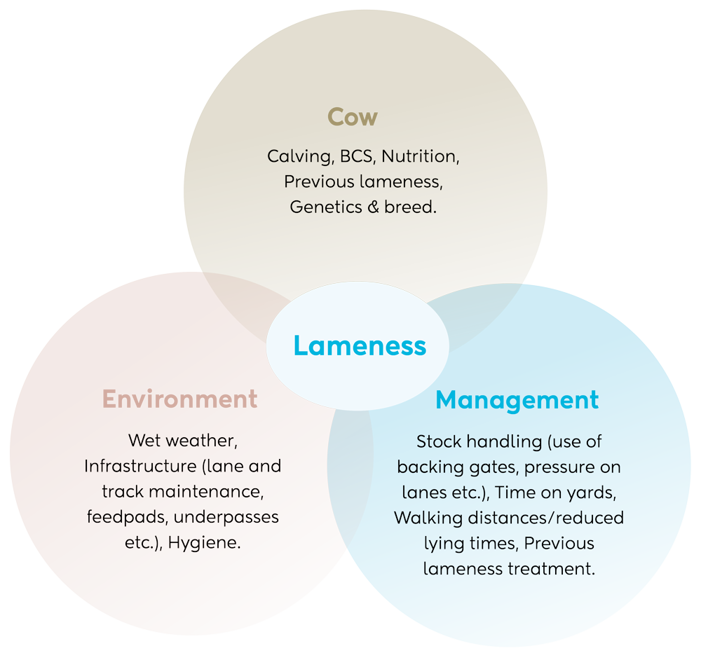
Cows become lame when a combination of risk factors occur. It is the interaction of the cow, her environment and management that leads to lameness on farm. One of the biggest risk factors for lameness is a previous case of lameness. Taking extra care of your heifers will help to prevent lameness in future lactations. Read more on these risk factors on page 4 of the Preventing and managing lameness guide.
By keeping good records, you can begin to understand lameness on your farm, e.g. types and seasonal patterns. This is helpful when you or your advisor is figuring out what the risk factors are on your farm.
The risk factors for lameness are multifactorial and will vary from farm to farm. Work with your advisor to develop a lameness prevention plan specific for your farm and associated risk factors.
The plan should include identification of risk factors and how these will be managed/mitigated, along with processes for record keeping, early identification and effective treatment. It should be monitored at least annually and updated as required.
Research shows that good stockmanship, having knowledgeable, trained, and aware people working with cows reduces lameness and improves animal welfare.
A well-designed, constructed, and maintained farm track is essential for reducing lameness and improving cow flow. Tracks should be wide enough to prevent crowding and have proper drainage, with regular maintenance to keep them in good condition. Effective gateway access and fenced drains also help reduce injuries and stress on cows. The surface should be smooth and comfortable, avoiding sharp stones that could damage hooves. Bridges and underpasses should be designed to allow smooth cow movement, providing sufficient width, good visibility, and gentle gradients to prevent hesitation and stress.
Now’s the perfect time to check in, plan, and set up for a strong season. We’ve pulled together smart tips and tools to help you stay ahead all winter long.
Whether you prefer to read, listen, or download handy guides, we’ve got you covered with trusted tools to support your journey every step of the way.
Put our proven strategies and seasonal tools to work. Boost production, support animal health and watch your profits hum.
Tools that are backed by science, shaped by farmers and made for this season.
That’s Summer Smarts.
Autumn Smarts brings together the research-backed tools that build resilience and boost performance.


